
William Dale – Local Journalism Initiative
Published online November 4, 2026, at www.pontiacjournal.com
PONTIAC — Kebaowek’s leaders are considering an appeal to the Supreme Court regarding the Near Surface Disposal Facility (NSDF) proposed for Chalk River Laboratories. This, after the Federal Court of Appeal recently overturned a lower court’s decision, now stating that the Canadian Nuclear Safety Commission (CNSC) was not responsible for upholding the United Nations Declaration on the Rights of Indigenous Peoples (UNDRIP) in their consultations. Canada signed this declaration and in 2021 the government announced its intention to adopt into law the need for free, prior and informed consent on unceded territory.
Kebaowek councillor Justin Roy shared the community’s reaction to the ruling. “We were really taken aback,” Roy said. “Going back to the original judicial review, we remained hopeful seeing the movement that’s been happening in the last decade in terms of Indigenous relations and respect for our rights. Unfortunately, it couldn’t have been a worse decision for not only Kebaowek, but all First Nations people across Turtle Island.”
Roy described the emotional impact on the community: “For myself, it was the full range of emotions: sad, heartbroken, upset, mad, confused. We strategized a lot of different scenarios, but we never envisioned such a bad decision which would walk everything back.”
Permits still needed before construction
In a statement to the Pontiac Journal, CNSC Media Relations representative Braeson Holland clarified the regulatory body’s standing. The CNSC emphasized that while the court ruling maintains the authorization for site preparation and construction under the Nuclear Safety and Control Act (NSCA), physical construction cannot begin immediately.
“The near surface disposal facility project requires a permit under the Species at Risk Act (SARA) before construction activities can begin,” Holland stated, adding “the operation of the facility, including the emplacement of waste, would need to be considered in a future licensing process, including a public hearing, should CNL come forward with an application to operate the facility.”
The CNSC maintained that its original Record of Decision concluded the facility is not likely to cause significant adverse environmental effects, provided CNL implements all proposed mitigation measures and environmental monitoring.
Hearing cancellations and legal next steps
Councillor Roy expressed frustration over notifications received following the court decision regarding previously planned consultation sessions. “We’ve already been notified that the final CNSC hearing that were proposed for late March or early April next year have already been cancelled,” Roy lamented. “To me, getting all these notices about cancelling these hearings just further speaks to more broken promises.”
Facing the ruling, Roy outlined Kebaowek’s legal path forward: “We have one or two options. One, we accept it and move forward—but then all First Nations people are stuck with this brutal, precedent-setting decision. Or, we have to take it to the Supreme Court of Canada. That’s what we’re looking into now. It’s less a question of if we’re going to, and more on what grounds and arguments we are going to seek. We cannot just roll over.”
To assist with ongoing legal expenses, Kebaowek has partnered with RAVEN Trust, a non-profit organization supporting Indigenous legal defense funds. Community members interested in supporting the campaign can visit raventrust.com.
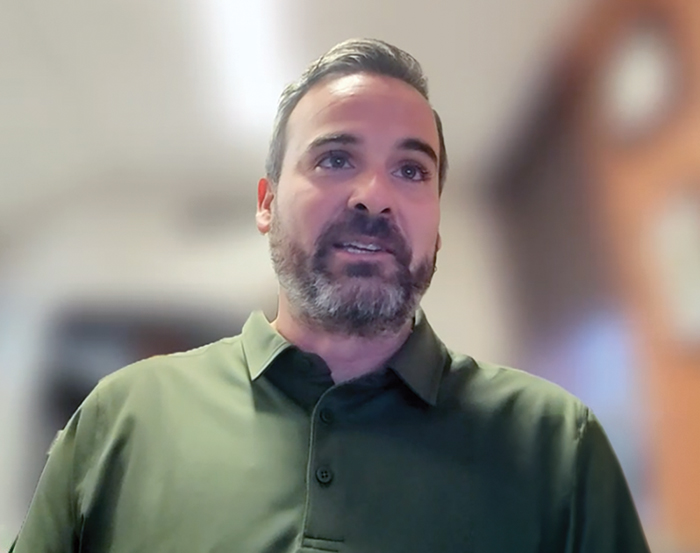
Cutline: Kebaowek First Nation elected councillor Justin Roy speaks during a video interview with the Pontiac Journal regarding the community’s legal options following the failed Federal Court of Appeal decision on the proposed Chalk River nuclear waste facility.