
Deb Powell
Published in the Pontiac Journal on January 28, 2026.
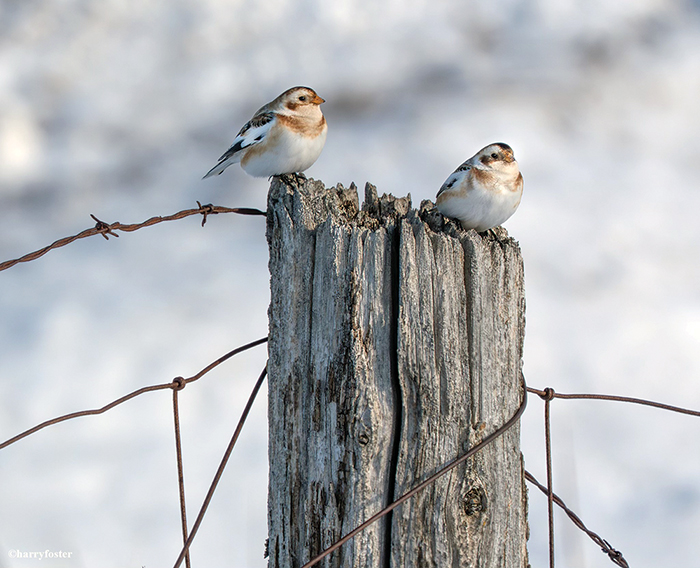
Local Christmas Bird Counts started off with Pembroke, including the western end of Allumette Island, December 17. Although the Ottawa River was almost completely frozen a few Mallard, one Hooded Merganser and 70 Common Goldeneye were spotted. Nice finds included Golden-crowned Kinglet, Purple Finch, Barred Owl, Cooper’s Hawk and Rough-legged Hawk. The largest number of any one species went to Snow Buntings with 3,154!
The next count was Quyon-Shawville and Snow Buntings topped the charts there as well with 523 observed. Nice finds included one Pine Grosbeak, Cooper’s Hawk, Red-tail Hawk and American Goshawk. Waterfowl were rare but 26 Goldeneye were counted
December 29 was Calumet Island and area but postponed one day due to weather. December 30 was a very windy day but a Golden Eagle was spotted as well as Pine Siskin and Common Redpoll. Snow Buntings were the most numerous species with 429 counted.
The Breckenridge – Dunrobin was January 4. A few Mallard were spotted and the most numerous species was Black-capped Chickadee – 288. Carolina Wren, Red-bellied Woodpecker and a Brown-headed Cowbird were special finds. A count of 63 Northern Cardinal is a good indicator of the more frequent occurrence of that species to the east of our area.
The last local count was January 5 in the Fort-Coulonge area. Nice finds included 2 Pine Grosbeak, Horned Lark, Cooper’s Hawk and a Common Redpoll. Pigeons were the most numerous species followed by Black-capped Chickadees, Blue Jays and American Gold Finch.
Bald Eagles were observed in all counts. This year Evening Grosbeak were also
present.
A Christmas Bird Count (CBC) circle is a specific area with a 24 km diameter. More than 2,000 counts place across North America and numbers are increasing in Latin America and the Caribbean. All results for the year are sent in to the Audubon Society and results can be found on their website.
Photo: Snow Bunting are most often seen in flocks, often large, along roadsides picking at grit and in open fields. In flight their white underbellies and wings with black tips are the most distinctive feature. They spend their summer in the Arctic tundra. (Photo: Harry Foster)