Published in the Pontiac Journal on January 14, 2026.
Tashi Farmilo
Local Journalism Initiative
QUEBEC CITY – Quebec’s agricultural sector was in focus in early December as more than 1,000 producers, policymakers and industry stakeholders gathered for the Union des producteurs agricoles (UPA) General Congress in Quebec City, amid mounting economic pressure, climate uncertainty and shifting trade conditions.
Held from December 2 to 4 under the theme “United for the Future,” the congress featured discussions on domestic food production, regulatory barriers and the need for stronger policy coordination to support farmers. Sophie Chatel, Member of Parliament for Pontiac–Kitigan Zibi and parliamentary secretary to the minister of agriculture and agri-food, attended the event and said the conversations reflected challenges already being felt at the local level.
Chatel emphasized the scale and importance of Canada’s agri-food sector, noting it is the country’s largest manufacturing industry. “We often talk about the automotive industry, but agri-food is much bigger, representing 7.2% of Canada’s GDP and one in every nine jobs,” she said.
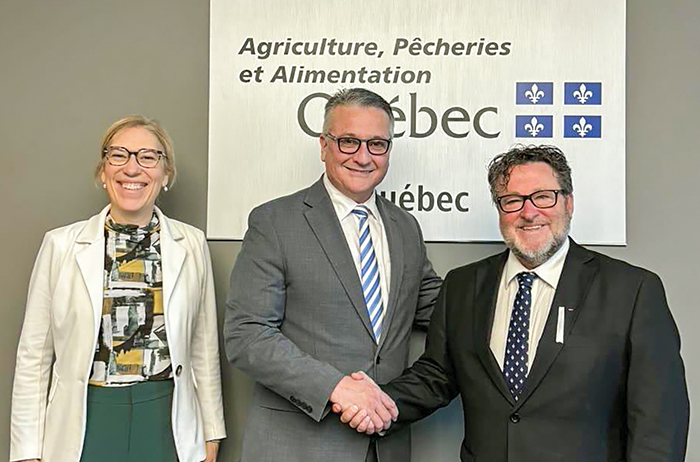
During the congress, Chatel and federal Agriculture Minister Heath MacDonald met with Quebec Minister of Agriculture Donald Martel to discuss provincial priorities and
federal–provincial collaboration. According to Chatel, stable and predictable policy frameworks are essential to ensure farm viability and protect food sovereignty.
Climate resilience was another recurring theme. Chatel highlighted federal investments aimed at helping farmers adapt to increasingly volatile weather patterns, including the
$38 million Agricultural Climate Solutions program administered through the UPA. The program supports practical measures such as improved soil health, cover cropping and other techniques intended to mitigate the impacts of drought and extreme conditions
International trade pressures were also raised as a growing concern. While agricultural products themselves are not always directly targeted by tariffs, Chatel noted that materials used in food processing and packaging — including aluminum, steel and wood — often are. Those added costs can affect farmers, processors and consumers alike.
As an example, Chatel pointed to Ideal Can, a Quebec-based company that has expanded its can manufacturing operations in Ontario. Traditionally, much of Quebec’s canned vegetable production involved shipping crops to the United States for processing before returning them to Canada for sale. Rising tariffs on Canadian aluminum and steel have made that model increasingly costly.
By investing in domestic production capacity, Ideal Can is seeking to shorten supply chains and reduce reliance on foreign manufacturers. “They now have a competitive product because U.S. cans are tariffed,” Chatel said, adding that keeping more of the process within Canada helps retain economic value domestically.
Chatel said resilience must be built through both policy and industry action. “When Ottawa talks about food security or innovation, it has to translate into concrete results on farms in places like Mansfield or Otter Lake,” she said.
The congress also renewed calls for regulatory reform and clearer government commitments. UPA president Martin Caron urged governments to strengthen food procurement policies, protect agricultural land and address rising credit costs. Federal
and provincial agricultural agreements are expected to be renegotiated later this year.
Photo : At the UPA General Congress, MP Sophie Chatel met with federal Agriculture Minister Heath MacDonald and Quebec Agriculture Minister Donald Martel to discuss the province’s agricultural priorities, with a shared focus on fostering a stable, equitable and efficient commercial environment to support farmers and strengthen food sovereignty.
(Submitted)