

Benjamin Segobaetso – Local Journalism Initiative
Published online September 9, 2026, at www.pontiacjournal.com
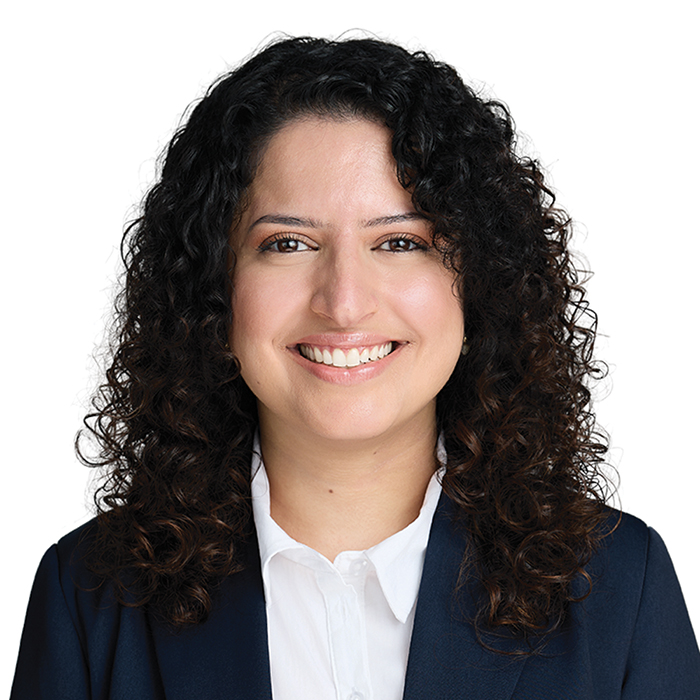
PONTIAC — Coalition Avenir Québec candidate Mariana Mefleh is pitching economic diversification and improved access to health care and education as priorities for Pontiac, while defending her party’s record on regional funding and French-language protection.
Responding to questions from the Pontiac Journal sent to announced candidates, Mefleh said Pontiac’s rural communities face a combination of pressures from U.S. tariffs threatening forestry and agriculture to persistent difficulties accessing health care, specialized educational services and transportation.
Her campaign message is that the region has begun to make progress under the CAQ government, but that more needs to be done to close the gap between Pontiac and better-served parts of Quebec.
On the economy, Mefleh said the continuing Canada-U.S. trade dispute demonstrates the vulnerability of communities that depend heavily on exports to the American market.
Forestry and agriculture are particularly important to Pontiac, and Mefleh said businesses, producers and workers affected by tariffs need provincial support even though international trade negotiations fall primarily under federal jurisdiction.
“Quebec cannot simply sit idly by waiting for federal measures,” she said. “Our role is to support our businesses and workers, ease their burden, and create the conditions necessary for them to weather this period of uncertainty.”
She pointed to the CAQ government’s reduction of the small-business tax rate from 3.2 per cent to 2.2 per cent and its procurement strategy favouring Quebec businesses as measures already taken to strengthen the domestic economy.
Mefleh did not propose a new Pontiac-specific tariff relief program, instead emphasizing diversification as a longer-term response to economic uncertainty.
“This crisis reminds us of one thing: we need to be more self-reliant and diversified,” she said.
For Pontiac, Mefleh said that means finding new markets, processing more of the region’s resources locally and supporting small and medium-sized businesses. She also identified productivity, automation, new technologies and business succession as opportunities to strengthen the local economy.
Mefleh applied a similar argument — progress made, but more work required — to health care and education.
“In the Pontiac, our young people should be able to succeed without their place of residence becoming a barrier,” she said.
Mefleh acknowledged that rural students face particular challenges accessing specialized services and transportation, while maintaining local schools remains an important concern.
She cited an increase in the Outaouais graduation rate from 74.6 per cent in 2020 to more than 81 per cent in 2023 and said provincial education funding has increased by 62 per cent since the CAQ took office in 2018.
Those investments, she said, have included tutoring, classroom support staff and specialized professionals.
“The catch-up is underway, but it must continue,” Mefleh said.
She did not identify new Pontiac-specific education measures, saying the CAQ’s election commitments on education will be announced in the coming weeks.
Health care, meanwhile, remains one of the most significant challenges facing rural Pontiac, where distances between communities and the availability of health-care workers can affect access to services.
Mefleh said the Outaouais is receiving substantially more health funding than it did several years ago. According to figures she provided, per-capita health-care spending in the region has increased 71.3 per cent since 2019, compared with 61.1 per cent across Quebec.
“The gap is narrowing, but there is still more work to do,” she said.
To address surgical wait times, Mefleh supports the CAQ proposal to offer patients surgery elsewhere in the public system after they have spent six months on a waiting list. If a patient reaches nine months, certain procedures could be performed at a private clinic and paid for by the public system.
The party is also proposing to purchase an additional 100,000 imaging examinations annually from private clinics, with patients paying nothing directly.
For Mefleh, improving access is particularly important in a geographically dispersed riding.
“Our postal code should never determine how long we have to wait to receive care,” she said.
Mefleh also defended the CAQ government’s language policies, including Bill 96, while acknowledging that Pontiac’s longstanding English-speaking population creates a different political and linguistic reality than in many other Quebec ridings.
“French is our common language, and we must continue to protect it,” she said.
But she added that protecting French should be balanced with “respecting the historical realities of our communities” and a responsible transition as language rules are implemented.
Mefleh said the CAQ has continued investing in English-language education, pointing to expansion funding provided to five schools within the Western Quebec School Board since 2018.
She said the objective should be to ensure young people acquire a strong command of French and can participate fully in Quebec society without ignoring the realities of the communities in which they live.
“French must remain at the heart of our identity and our shared way of life, while allowing us to move forward with respect and balance,” she said.
Taken together, Mefleh’s responses position her campaign around the argument that Pontiac needs a stronger voice within government to address its rural and regional challenges.
If elected, she said she would maintain direct contact with producers, entrepreneurs, workers and communities across the riding and press their concerns at the provincial level — whether the issue is protecting jobs from U.S. tariffs, keeping rural students connected to services or reducing the distance residents must travel to receive health care.


