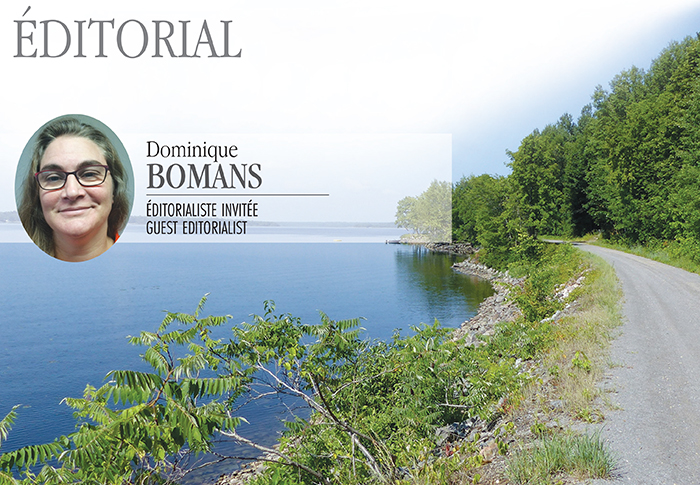
Pontiac has long depended on its forests. Forest resources have provided a livelihood for families and supported local businesses; even though the forestry crisis persists, log driving still shapes our history and remains etched in our memories.
The fires ravaging Spain, France, Ontario and the rest of Canada serve as a reminder that forest fires are not so far away. They spread as a result of droughts, heatwaves and strong winds, but also when forests are too vulnerable, too densely vegetated or ill-prepared. In 2026, Canada has already experienced a fire season of exceptional intensity, with over 3 million hectares burnt and evacuations in several communities. The smoke crosses borders, paying no heed to distances or administrative boundaries.
Pontiac did not have to wait for the fires elsewhere to realize this. In mid-July, a fire sparked by a lightning strike in the north of the MRC was reported by SOPFEU as being out of control, whilst the MRC imposed a total ban on lighting fires across its entire territory. A few days later, the ban was lifted, but the incident served as a reminder that here too, the risk is very real. Indeed, the spring saw a sharp rise in calls relating to brush fires in the MRC.
For the Pontiac, the question is not whether we are directly affected, but whether we are prepared. A forestry-based MRC that waits to be hit always pays a higher price than one that invests in prevention. Fighting wildfires costs millions, destroys standing timber, disrupts businesses, tourism, outdoor activities and local employment. They impoverish the landscape and weaken communities.
Whilst global warming is exacerbating the danger, forest management must be able to respond to it. In the Pontiac region, there are calls to revitalise the management of
private forests, given that a large proportion of the forest cover is reportedly not being actively managed. Reducing fuel loads, diversifying tree stands, planning firebreaks, improving land maintenance and taking action at an earlier stage: these are concrete measures that can make a real difference.
Initiatives led by Indigenous communities across the country, including the Cree community of Mistissini in James Bay, in northern Quebec, show that better preparedness, training and the use of local knowledge can make a difference. When it comes to forest management, the Pontiac region, too, can become a leader. Its forest resources are not just a heritage to be preserved; they are a responsibility to be upheld. Given the fires raging elsewhere, in a region like ours, it is never too early to shout: ‘Fire!’